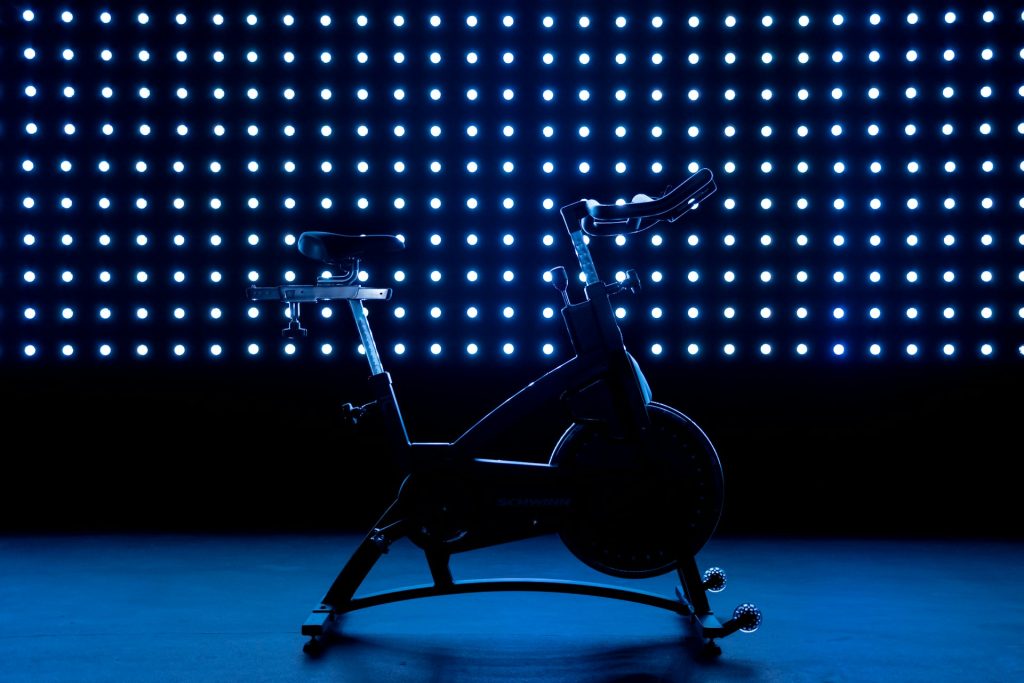
Winter makes it easy to find excuses: it’s cold, it’s dark, the roads are slippery, and you don’t feel like going out to cycle or run. And yet, there’s that little voice inside saying it would be good to stay in shape, lose a few kilos, or at least not switch fully into “winter mode”.
If you’re a busy adult aged 25–55 who wants to hit spring feeling healthy, strong and energised, a stationary bike workout and training plan is exactly for you.
In this article, you’ll learn how to build an effective winter stationary bike workout and training plan without it feeling like punishment, and without spending hours on the bike.
What will you get from this article?
- You’ll understand why the stationary bike is such a great winter solution.
- We’ll go step by step through the correct setup and basic technique.
- You’ll get a 4-week beginner plan, plus an advanced plan.
- We’ll look at common mistakes to avoid and how to stay motivated.
- Finally, you’ll get answers to the most frequently asked questions.
Do this now: decide that over the next 4 weeks you’ll get on the stationary bike at least 3× a week — that will be your winter challenge.
Why is stationary bike training ideal in winter?
A stationary bike is one of the easiest ways to avoid losing fitness over winter:
- Weather-proof: rain, wind, freezing temperatures — you can train any time.
- Low impact on joints: cycling is gentler on knees, hips and ankles, so it’s a great option if running is too much for your joints.
- Effective fat burning: research suggests a moderate-intensity stationary bike session can burn roughly 210–300 calories in 30 minutes, depending on body weight and intensity.
- Cardio benefits: regular cycling improves endurance, blood pressure and blood lipid values, and reduces the risk of cardiovascular disease.
International health guidelines recommend adults aim for 150–300 minutes of moderate-intensity or 75–150 minutes of vigorous-intensity aerobic activity per week to maintain health. Stationary cycling fits perfectly: 3–5× 30–40 minutes weekly already keeps you close to the recommended range.
Do this now: write down (on paper or in your phone) which 3 days will be your “bike days” this week (e.g., Monday–Wednesday–Friday), and treat them like an appointment with yourself.
How to set up your stationary bike for safe training
Before you start properly following a stationary bike workout and training plan, it’s crucial to set the bike up correctly. It will boost performance and protect your joints.
Basic setup in 5 steps
1) Saddle height
- Stand next to the bike: the saddle should be roughly at hip-bone height.
- Sit on the bike and place your heel on the pedal. When the pedal is at the lowest point, your knee should be almost fully extended — but not locked.
- If your knee drifts inwards or outwards while pedalling, fine-tune the height.
2) Saddle fore–aft position
- Set the pedals horizontally (one forward, one back).
- The knee of your front leg should be roughly above the pedal axle.
- If you slide too far forward or feel like you’re falling back, adjust the saddle.
3) Handlebar height
- As a beginner, set it higher so your back doesn’t round too much.
- Later, you can lower it if it’s comfortable — the goal is a neutral, relaxed spine position, with no neck/shoulder tension.
4) Resistance (load)
- Never train with zero resistance — it’s not joint-friendly and it’s not effective.
- Start with light–moderate resistance: you should feel you’re working, but still be able to talk while pedalling.
5) Posture and pedalling
- No need to collapse onto the handlebars — keep shoulders relaxed, chest open.
- Pedal smoothly in circles: don’t only push down, also pull up (if your pedal system allows).
Do this now: spend 10 minutes setting your bike up using the steps above, and take a photo of the correct setup so you can repeat it next time.
Warm-up and cool-down — don’t skip them!
The foundation of a winter stationary bike workout plan isn’t just the “main set”. Warm-up and cool-down matter just as much.
Warm-up (5–8 minutes)
- 2–3 minutes very easy pedalling
- 2–3 minutes gradually increasing effort (slightly faster, slightly heavier)
- 1–2 minutes of gentle mobility next to the bike: torso circles, shoulder rolls, ankle circles
Cool-down (5 minutes)
- 3–4 minutes easy pedalling with gradually reduced resistance
- 1–2 minutes stretching: hamstrings, quads, calves, hips, lower back
Do this now: plan your sessions so that your “30 minutes” always includes 5 minutes warm-up + 5 minutes cool-down — you’ll reduce injury risk and the workout will feel better.
4-week winter stationary bike training plan for beginners
This plan is ideal if:
- you haven’t trained regularly in a while, or
- you’re new to stationary bike training, or
- your goal is general fitness, better endurance, and avoiding “winter rust”.
Principle: 3 sessions per week, each 30–40 minutes including warm-up and cool-down.
Week 0 – Getting used to it (optional, if you’re totally new)
- 10–15 minutes very easy pedalling daily
- Goal: get used to the movement, the saddle, and your position
Do this now: pick 3 days for 10–15 minutes easy pedalling — zero pressure, just getting comfortable on the bike.
Week 1 – Building the base
3 sessions/week, e.g., Monday–Wednesday–Friday
Session structure (30 minutes):
- 5 min warm-up (easy pedalling)
- 5 min easy–moderate pace (comfortable, slightly breathy)
- 3× (5 min work + 2 min recovery):
- Work: moderate pace, slightly increased resistance
- Recovery: very easy pedalling
- 3–5 min cool-down
Effort by feel: about 5–6/10 (challenging but doable).
Do this now: after each workout in Week 1, note how long you could pedal comfortably and how tired you felt on a 1–10 scale. You’ll use this later to compare progress.
Week 2 – Increasing duration
3 sessions/week (around 35 minutes)
Session structure (35 minutes):
- 5 min warm-up
- 10 min continuous moderate pace
- 3× (6 min work + 2 min recovery):
- Work: slightly faster than last week or one step higher resistance
- Recovery: easy pedalling
- 4 min cool-down
Do this now: choose a motivating playlist or podcast that you only listen to during training — your brain will associate it with “workout mode”.
Week 3 – Pace play: easy intervals
3 sessions/week (35–40 minutes)
Session structure:
- 5 min warm-up
- 10 min moderate pace
- 6× (1 min fast + 2 min easy):
- Fast: 7/10 effort (hard breathing, but doable for 1 minute)
- Easy: 3–4/10 effort
- 5–10 min easy pedalling + cool-down
This becomes interval-style training, which is a highly effective endurance + fat-burning combination.
Do this now: set a timer on your phone (or use an app) to signal the 1-minute fast and 2-minute easy blocks — don’t waste mental energy counting minutes.
Week 4 – Stabilise and a mini challenge
3 sessions/week
First two sessions (35–40 minutes):
- 5 min warm-up
- 15 min continuous moderate pace
- 5× (1 min fast + 2 min easy)
- 5–8 min cool-down
Third session: “test”
- 5 min warm-up
- 20–25 min steady moderate–hard pace (6–7/10)
- 5–8 min cool-down
Watch how long you can hold a steady pace without collapsing — hard work, but controlled.
Do this now: at the end of Week 4, compare your notes from Week 1 with your current performance. See your progress — and reward yourself (new playlist, sports top, small treat — anything).
Advanced winter stationary bike training plan – performance + fat loss
If you already have a base fitness level and 30–40 minutes feels comfortable, you can step up to a more intense plan.
Principle: 3–4 sessions per week with different focuses:
- 1× longer steady endurance ride
- 1–2× interval session
- 1× moderate “maintenance” ride
Sample advanced weekly plan
Monday – Interval 1 (short but tough)
- 5–8 min warm-up
- 8× (1 min hard (7–8/10) + 2 min easy)
- 5–10 min cool-down
Wednesday – Moderate maintenance
- 5 min warm-up
- 25–30 min steady moderate pace (6/10)
- 5–10 min cool-down
Friday or Saturday – Longer endurance
- 5–8 min warm-up
- 40–60 min steady moderate intensity (5–6/10)
- 5–10 min cool-down
+ Optional extra: easy recovery spin (20–30 minutes)
Helps circulation, loosens muscles, and keeps you in the movement rhythm.
Do this now: pick one advanced day (e.g., Friday) and put it in your calendar as “Long ride – me time” so you don’t feel guilty for taking that time for yourself.
Common mistakes during stationary bike training — and how to avoid them
1) Starting too fast, too heavy
Many people jump on the bike in winter as if they want to make up the entire season in one session: huge resistance, max speed — then they’re destroyed after 10 minutes.
Solution:
Start lighter and build gradually. The goal isn’t to “kill yourself” in the first session — it’s to be able to train again tomorrow.
2) Skipping warm-up and cool-down
“I’ve only got 20 minutes — why warm up?” Sound familiar? Cold muscles won’t agree.
Solution:
Even for a short session, do at least 3–5 minutes warm-up + 3–5 minutes cool-down. Lower injury risk and you’ll feel better afterwards.
3) Poor posture
Rounded back, tense shoulders, head down — hello neck and lower back pain.
Solution:
Look forward, not at the floor. Relax your shoulders, keep elbows slightly bent. Pause occasionally and check your posture.
4) Boring, repetitive workouts
If you always do the same 30 minutes at the same pace with the same music, sooner or later you’ll get bored — and workouts will disappear.
Solution:
Alternate session types: intervals one day, longer steady ride the next. Use different playlists: “interval”, “easy”, “long ride”. Try virtual rides or videos if you enjoy visuals.
Do this now: pick one mistake you recognise in yourself, and write down what you’ll replace it with (e.g., “I won’t skip warm-up → minimum 5 minutes easy pedalling at the start of every session”).
Winter motivation — how not to get bored of the stationary bike
A stationary bike workout plan only works if you stick with it long-term. That takes a bit of motivation management.
1) Set a real goal — not just “I want to lose weight”
Work with specific, measurable goals:
- “Over the next 4 weeks, I want to complete 12 workouts.”
- “By March, I want to be able to ride 60 minutes at a steady moderate pace.”
2) Track distance, time, calories
Your brain loves tangible numbers. If you see your weekly minutes or “virtual kilometres” rising, it’s easier to continue.
Track it in an app, Excel, or notes — whatever is easiest. Add a short comment: “Started tired, but my mood improved by the end.”
3) Reward yourself
Nothing massive needed:
- new sports socks
- a favourite episode only after training
- a calm, warm bath on long-ride day
4) Social motivation
If possible, involve friends or family:
- do a shared challenge (who rides the most minutes this week)
- share post-workout photos or stats
Do this now: write down one concrete goal (e.g., “12 workouts in 4 weeks”) and put it somewhere visible — fridge, desk, or as a phone reminder.
Evidence: what does science say about stationary bike training?
Stationary cycling isn’t recommended just because it “feels good” — there’s solid research behind it.
A systematic review suggests indoor cycling (stationary bike/spinning) can improve aerobic capacity, blood pressure, blood lipid values and body composition.
The WHO and other organisations recommend adults do at least 150–300 minutes of moderate-intensity aerobic activity per week — such as cycling — which reduces the risk of several chronic diseases.
From a calorie-burning perspective, even a 30-minute moderate-to-hard stationary bike session can burn several hundred calories. Over time, it can play a major role in weight management — especially if you also improve your diet.
Bottom line: you don’t have to run marathons or spend hours outside in the cold to do something significant for your health — a well-built stationary bike training plan can be more than enough to reach the recommended activity levels.
Do this now: total up how many minutes you ride this week and write it down — that’s your baseline you can build on in the coming weeks.
Frequently asked questions (FAQ) about stationary bike training plans
1) How often should you train on a stationary bike?
If you’re a beginner, 3× per week is plenty (e.g., Monday, Wednesday, Friday). If you’re more experienced, you can go 4–5×, but include easier days — not every session should be a brutal interval workout.
Do this now: decide that next week you’ll ride at least 3 times — and put it in your calendar.
2) Is a stationary bike enough for weight loss?
A stationary bike can absolutely help because it burns calories — but nutrition matters just as much. If you maintain a small calorie deficit over time (you burn more than you eat), cycling is a great tool for fat loss.
Do this now: after your next session, note roughly how many calories you burned (bike display or app), and think about what kind of snacking that would “cancel out”.
3) How long should a stationary bike workout be?
As a beginner, 20–30 minutes is already excellent if you do it consistently. As an advanced rider, aim for 35–60 minutes, depending on the type (short intense intervals vs longer steady work). The key is: first build consistency, then increase duration and intensity.
Do this now: choose a realistic session length (e.g., 30 minutes) and stick to it for a full month.
4) When will you see results?
It depends on your starting point, diet and consistency, but generally:
- After 2–3 weeks, you may notice breathing is easier and you feel less out of breath.
- After 4–6 weeks, energy and wellbeing often improve — and if your diet is on track, you may see changes in centimetres/kilos too.
Do this now: take a “before” photo and measurements (waist, hips, thigh), and repeat in 4 weeks — that’s how you’ll see objective progress.
5) Is a stationary bike a good choice if your knee hurts?
In many cases, cycling is gentler on the knees than running because impact is lower. But if your knee pain is frequent or severe, speak to a doctor or physiotherapist and adjust your training accordingly.
Do this now: if you have recurring knee pain, book an appointment with a professional before you ramp up intensity.
Summary: 3 key takeaways for winter stationary bike training
1) Follow gradual progression
Don’t try to make up months in one week. 3× 30–40 minutes is an excellent start — especially with a well-built plan.
2) Pay attention to setup and technique
A properly set bike isn’t just more comfortable — it protects your joints and makes training more effective.
3) Consistency beats heroic sessions
More moderate sessions beat rare, all-out workouts. That’s what delivers health and performance results over time.
Next step (CTA)
Choose the plan that fits you (beginner or advanced), schedule your 3–4 weekly sessions in your calendar, and start your first winter stationary bike workout today.